

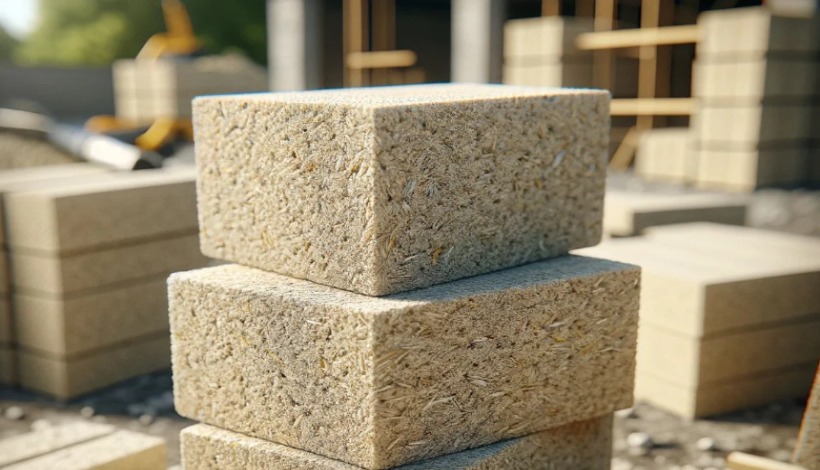
Hemp also offers multiple benefits in the construction industry. We name some of the most important ones:
Sustainability: Hemp is a renewable resource that grows quickly and requires fewer pesticides and herbicides compared to other crops. Its use in construction contributes to environmental sustainability.
Insulation: Hemp fibers have excellent insulating properties, which helps maintain comfortable indoor temperatures, reducing the need for heating and cooling. This can translate into savings in energy costs.
Moisture resistance: Hemp construction materials are resistant to moisture and are not affected by mold and rot, making them ideal for green and highly durable construction.
Low carbon footprint: The production and use of hemp in construction has a low carbon footprint, as the plant absorbs CO2 during its growth, contributing to the reduction of greenhouse gases.
Lightweight and Strong: Building materials made from hemp, such as hempcrete, are lightweight yet strong, making them easy to transport and handle on the construction site.
Acoustic Properties: Hemp fibers also offer good sound-absorbing properties, which can help improve comfort inside buildings by reducing noise.
Biodegradability: Unlike many synthetic materials, hemp products are biodegradable, giving them a lower environmental impact when disposed of.
Aesthetics: Hemp products can offer a natural, rustic aesthetic that is appealing to many modern, eco-friendly constructions.
Easy to Work With: Hemp-based materials are generally easy to work with and do not require harsh chemical treatments, reducing the environmental burden in their processing.
These benefits make hemp an attractive option for architects, builders, and homeowners looking for sustainable alternatives in construction.