

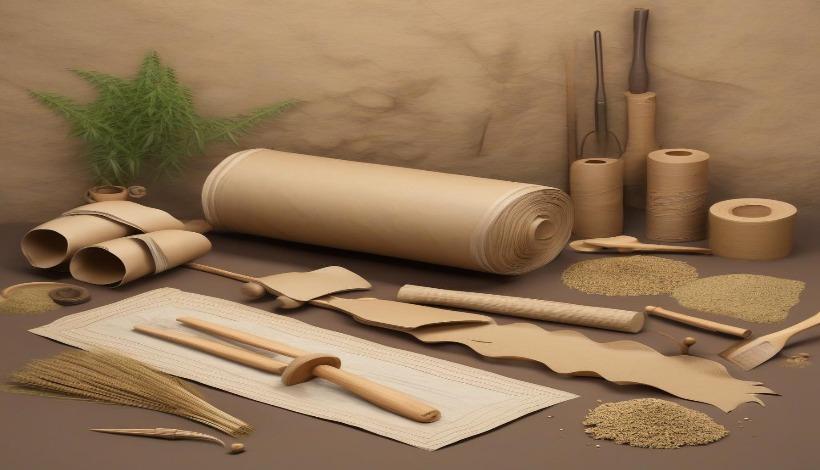
Hemp can be used in the paper industry in a variety of ways, and its benefits are significant. Below we explain how hemp is used in this industry and what its main advantages are:
Uses of hemp in the paper industry:
Fibers for paper pulp: Hemp fibers can be processed to produce paper pulp. This involves collecting and treating hemp stalks to extract the fibers, which are then bleached and transformed into paper.
Specialty papers: Hemp paper is used to make specialized products, such as cigarette paper, graphic arts papers, recycled paper, and high-quality printing paper.
Mixing with other materials: Hemp can be mixed with other fibers, such as wood paper, to improve the quality and durability of the final product. This mixture helps to decrease the amount of paper produced from trees.
Recycled products: Hemp paper is an option for the production of recyclable and biodegradable products, promoting more sustainable practices in the industry.
Benefits of hemp in the paper industry:
Sustainability: Growing hemp requires less water, fewer pesticides, and less space compared to the trees used to make paper. Additionally, hemp grows faster and matures in a short period of time (approximately 3 to 4 months).
Lower carbon footprint: Producing hemp paper has a significantly lower carbon footprint compared to producing wood pulp paper, contributing to the reduction of greenhouse gas emissions.
Durable and strong fiber: Paper made from hemp is more durable and stronger than wood pulp paper, meaning it has a longer shelf life and may be more appropriate for applications that require sturdiness.
Premium quality: Hemp paper is high quality, with a texture and finish that can be superior to conventional paper, making it attractive for luxury products, graphic arts, and stationery.
Biodegradability: Hemp paper products are biodegradable and break down more quickly than paper products made from chemically treated wood pulp.
Product Diversification: Using hemp in paper production allows for the creation of a variety of innovative products that can appeal to environmentally conscious consumers.
Soil Benefits: Growing hemp can help improve soil health by preventing erosion and promoting biodiversity.
Lower Long-Term Costs: Although the initial cost of producing hemp paper may be higher, the long-term benefits in terms of sustainability and durability can result in financial savings.
Using hemp in the paper industry not only provides a versatile and durable material, but also represents a step toward more sustainable and responsible practices in the production process.